
THE COMPLETE DELHI TO SPITI VALLEY HIGHWAY CIRCUIT: Routes, Passes & Stoppages
A comprehensive field breakdown of traversing the rugged Hindustan-Tibet Highway, managing vehicle oxygen intake at 14,000+ ft, negotiating water crossings at Malling Nallah, and crossing Kunzum Pass safely with private chauffeur support.
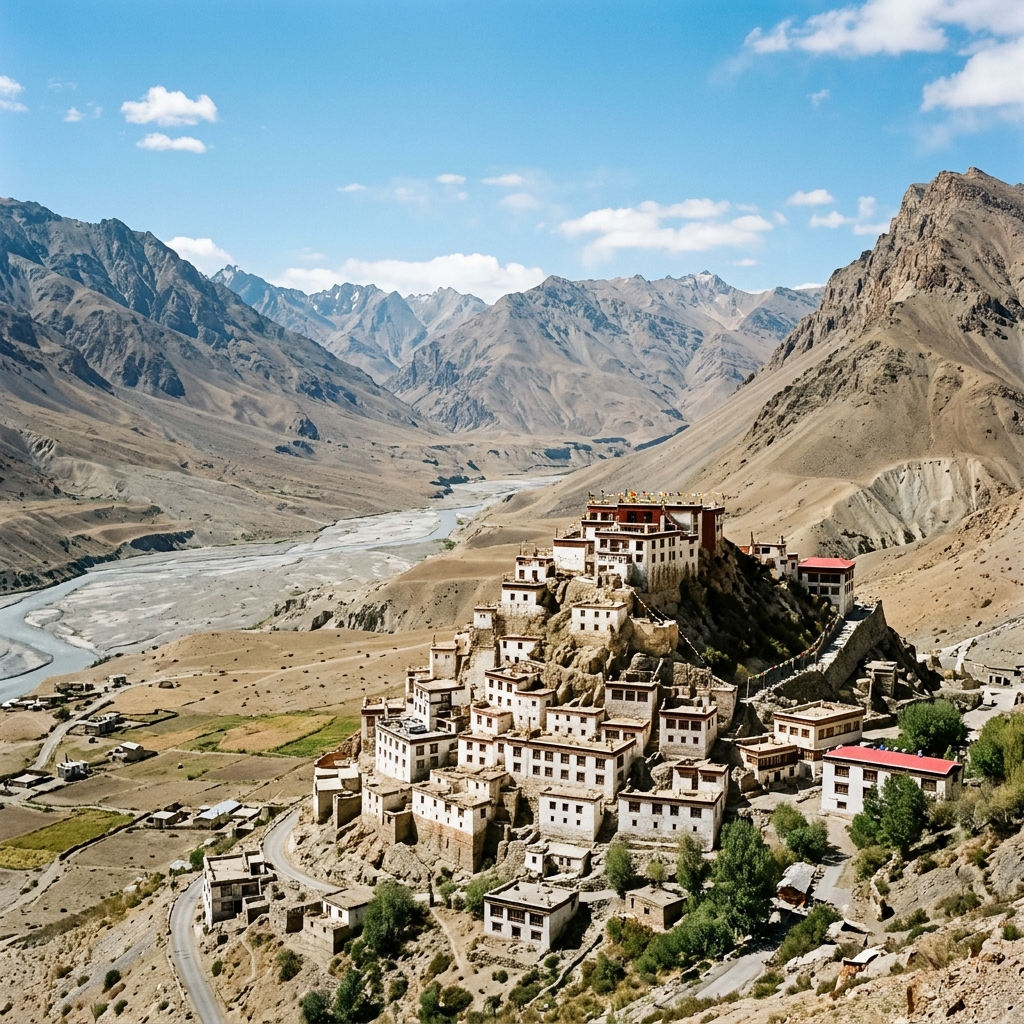
1. Understanding the Hindustan-Tibet Trans-Himalayan Highway
Traversing the Spiti Valley circuit is widely celebrated among overland travelers as one of the most visually dramatic road journeys in the trans-Himalayan belt. Known historically as National Highway 05 (NH-05) and extending into NH-505, this ancient trade route cuts directly through vertical granite gorges carved over millennia by the turbulent Sutlej and Spiti rivers.
Unlike standard weekend mountain drives to Shimla or Manali, the full Spiti circuit forms an expansive loop that begins in the plains of Delhi, ascends gradually through the pine valleys of Kinnaur, transitions into the barren high-altitude desert of Spiti, and descends back through Lahaul and Kullu valleys via the 9.02 km Atal Tunnel.
— Field Acclimatization Advisory from Mountain Chauffeur Dispatch
2. Stage-by-Stage Itinerary & Recommended Stoppages
To ensure optimal driving comfort, vehicle reliability, and daylight driving on high-altitude passes, we recommend pacing the journey across 7 primary stages:
Delhi to Narkanda / Rampur (410 KM • 9–10 Hrs)
Depart Delhi early morning via the Trans-Haryana Expressway. Bypass Shimla city traffic and ascend directly to Narkanda (2,708 m) amidst cedar and pine forests. Take an evening drive up to Hatu Peak for a 360-degree sunset view over the Great Himalayan Range.
Narkanda to Sangla & Chitkul (160 KM • 6–7 Hrs)
Cross into the dramatic Kinnaur region via the famous Taranda Dhank cliff-hanging roadway. Follow the gushing Baspa River to Sangla and proceed to Chitkul (3,450 m)—the last inhabited Indian village near the Indo-Tibetan border.
Sangla to Kalpa, Nako & Tabo (185 KM • 7–8 Hrs)
Watch the golden morning sunrise over Kinner Kailash peak from Kalpa. Drive along the Khab confluence where the Sutlej meets the turquoise Spiti River. Ascend the twisting Ka Loops to Nako Lake and reach the ancient UNESCO World Heritage Tabo Monastery, founded in 996 AD.
Tabo to Dhankar, Pin Valley (Mudh) & Kaza (120 KM • 5–6 Hrs)
Visit the clifftop fortress of Dhankar Gompa perched above the confluence of Spiti and Pin rivers. Take an excursion into the biosphere of Pin Valley National Park at Mudh Village, before arriving at the administrative headquarters of Spiti at Kaza (3,800 m).
Kaza High-Altitude Village Circuit (80 KM Local)
Dedicate a full day exploring Ki Monastery, the wildlife habitats of Kibber, Asia's highest suspension bridge at Chicham (13,596 ft), the world's highest post office at Hikkim (14,567 ft), and the ancient fossil beds of Langza under the shadow of Chau Chau Kang Nilda peak.
Kaza to Chandratal Lake via Kunzum Pass (100 KM • 5–6 Hrs)
Ascend the mighty Kunzum Pass (15,059 ft) with prayer flags fluttering in high winds. Pay homage at the Kunzum Mata temple, then branch off onto the rugged 14 km off-road trail leading to the crescent-shaped turquoise waters of Chandratal Lake (4,300 m).
Chandratal to Manali via Batal, Gramphu & Atal Tunnel (125 KM • 6 Hrs)
Tackle the boulder fields and water crossings between Batal and Gramphu along the Chandra riverbed. Connect with the smooth paved Manali-Leh Highway at Sissu and transit the 9.02 km Atal Tunnel into Manali.
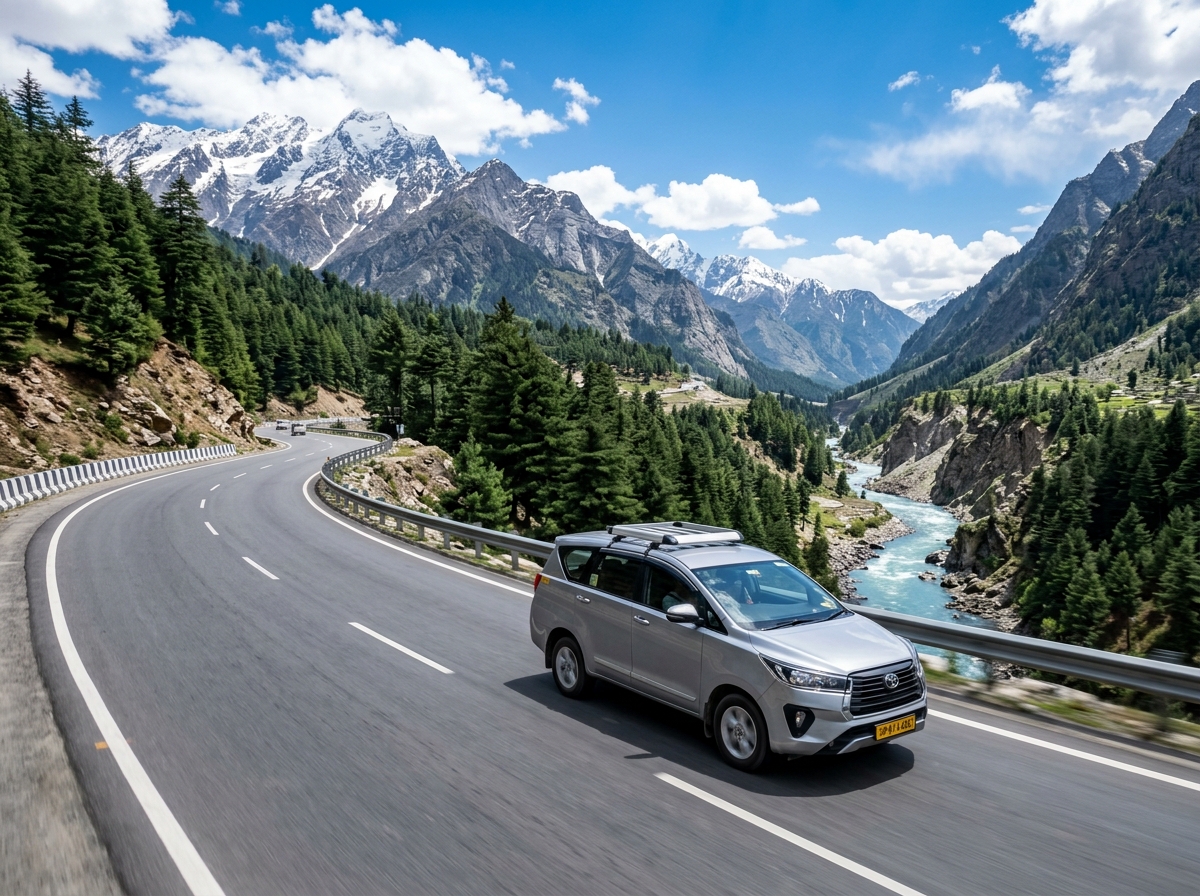 High ground-clearance vehicle negotiating Kinnaur cliff cuts.
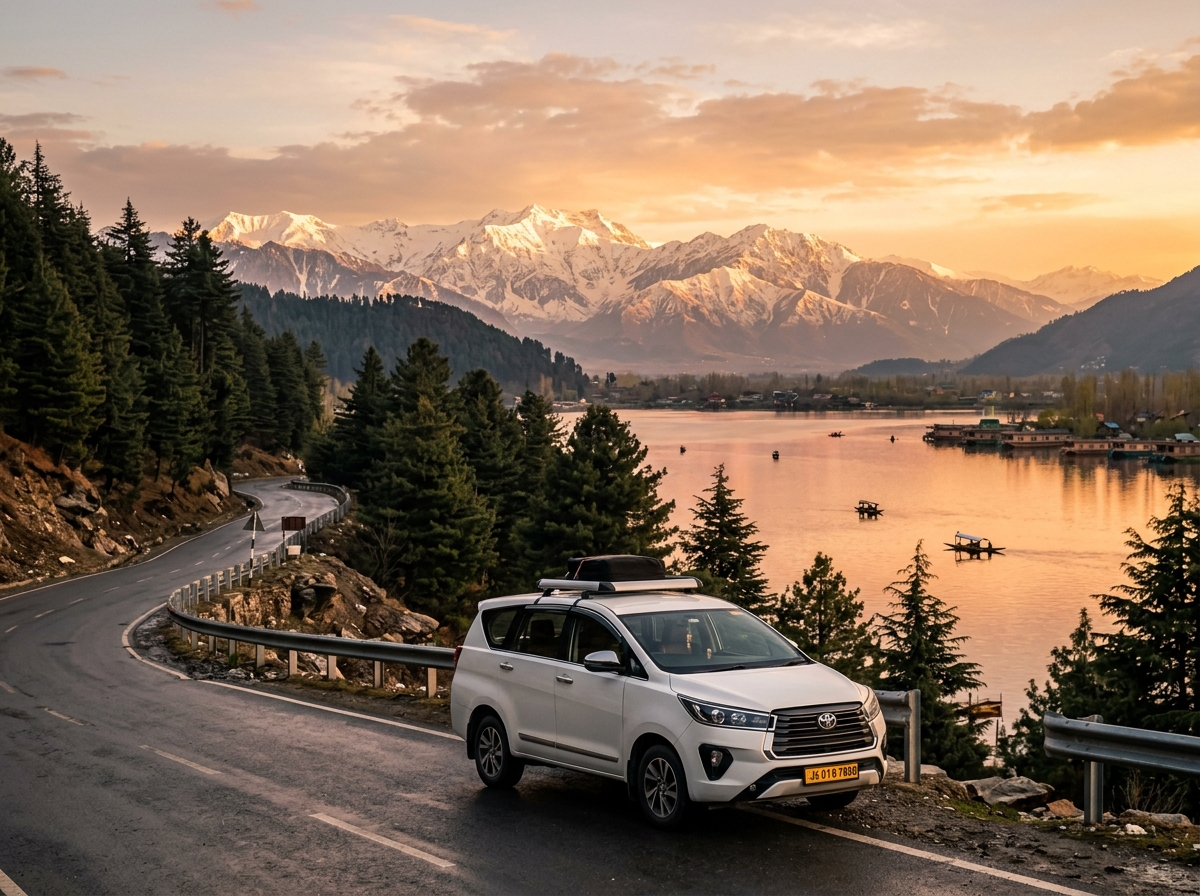 Approaching high-altitude passes near Kunzum La (15,059 ft).
3. High-Altitude Vehicle Safety & Driver Protocols
Driving at elevations above 10,000 feet introduces severe mechanical demands that do not exist on plains highways:
- Oxygen Depletion in Engines: Atmospheric density drops by nearly 45% at 15,000 feet. Turbocharged diesel engines require proper gear-ratio management to prevent low-RPM turbo lag on hairpin inclines.
- Sub-Zero Nighttime Antifreeze: Temperatures at Kaza and Chandratal regularly plunge below freezing even during summer months. Using a 50:50 glycol-to-water coolant ratio is mandatory to avoid cracked radiator blocks.
- Brake Fade Prevention on Descents: Never coast in neutral down long mountain descents from Kunzum or Rohtang. Rely on low-gear engine braking (2nd or 3rd gear) to preserve brake pads from overheating.
- Water Crossing Timing: Glacial melt torrents (such as Malling Nallah and Chhota Dhara) swell drastically in the afternoon due to solar melting. Always schedule pass crossings between 7:00 AM and 10:30 AM when water levels are at their lowest.
4. Permits & Inner Line Regulations
Because Kinnaur and Spiti share international borders with Tibet, checkpost documentation is strictly enforced:
For Indian Travelers: No Inner Line Permit (ILP) is required for Indian citizens. Carrying original valid government ID cards (Aadhaar Card, Passport, or Voter ID) is mandatory for checkpost registrations at Jangi (Kinnaur) and Sumdo (Spiti).
For Foreign Nationals: An Inner Line Permit is mandatory for the protected stretch between Khab and Sumdo. Permits can be obtained at District Magistrate / SDM offices in Shimla, Rampur, Reckong Peo, or Kaza.